

Thermography · roofs · buildings · assets
Thermal drone surveys
Add radiometric or thermographic evidence to the visual inspection, helping investigate heat loss, moisture, electrical or asset-performance questions.
Facts panel
- Capture
- Thermal and corresponding visible imagery where the sensor and brief support it.
- Applications
- Roofs, building envelopes and selected industrial or renewable-energy assets.
- Planning
- Weather, surface, loading and time of day matter.
- Limit
- A thermal pattern is evidence to interpret, not a diagnosis on its own.
Already planning a roof inspection? Thermal capture is often added to a visual drone roof survey on the same visit.
Explore drone inspectionsSee temperature differences that visible images cannot show
A visual camera records surface condition. A thermal sensor records apparent temperature patterns. Used under appropriate conditions, those patterns can help an experienced building, electrical or asset professional identify areas that warrant closer investigation.
DTA plans and captures the aerial data. The meaning of an anomaly depends on the material, environment, asset state and question being investigated, so the interpretation and any remedial decision should sit with the relevant qualified professional unless a separate approved interpretive service is explicitly included.
We do not yet publish a thermal case study; the roof survey case studies below show the same capture method and reporting.
Suitable uses
Depending on the site and brief, thermographic capture may support investigation of:
- roof areas with possible moisture or insulation variation;
- discontinuities in a building envelope;
- heat-loss patterns under suitable internal/external conditions;
- electrical or mechanical hotspots visible from the permitted standoff;
- solar or renewable-energy assets when the operating and environmental conditions support the test.
Not every visible temperature difference is a defect. Thermal reflections, emissivity, wind, solar loading, moisture, weather and viewing angle can all affect the image.
Plan for meaningful conditions
Thermal work is not simply a normal inspection with another camera. The survey may need a specific time window, temperature differential, dry conditions, low wind, limited solar loading or an asset operating state agreed with the client. Before quoting, DTA should confirm these points with the client.
- Target and construction/material
- Question to be answered
- Required image type, access and site safety
- Conditions under which the target will be operating
What the deliverable can include
Imagery
- Thermal overview and detail images
- Matched visible-light images for orientation
Structure and metadata
- A clear image naming and location structure
- Apparent-temperature scale and capture metadata where the sensor supports it
Review
- Annotations of agreed areas for professional follow-up
- A DTA Inspect delivery when included in the scope
The final scope must state whether images are radiometric, whether post-capture temperature analysis is possible and who is responsible for interpretation.
Thermal capture supports the renewable energy sector when investigating panel or blade surface temperature questions.
Send us these six things
-
01
Site location / boundary
-
02
Required output
-
03
Intended use
-
04
Preferred timescale
-
05
Access / airspace constraints
-
06
Any existing drawings
Common questions
Can a thermal survey prove that a roof is leaking?
No single thermal image proves the cause of a roof problem. It may show a pattern consistent with moisture or insulation variation, which a building professional can investigate alongside construction information, weather history and other tests.
Can you fly a thermal survey at any time of day?
Not if the survey is to answer a meaningful technical question. The suitable time depends on the target, weather, solar exposure, internal conditions and the investigation method.
Will I receive both thermal and normal photographs?
Matched visible images can be included and are often useful for orientation. Confirm the required image pairings and reporting format during scoping.
See it in practice
7 September 2024
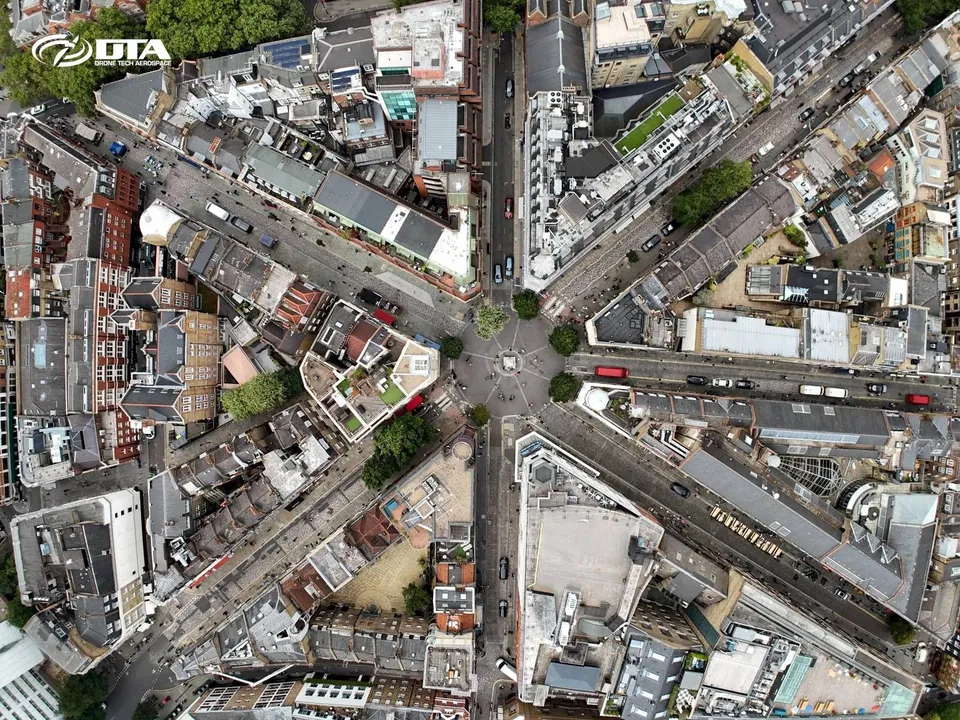
144 Drone Property Roof & Façade Inspections in Central London in 2 Months
In July and August 2024 DTA completed 144 drone roof and façade inspections across Central London, one of the busiest periods yet for this service in the capital.
9 April 2019
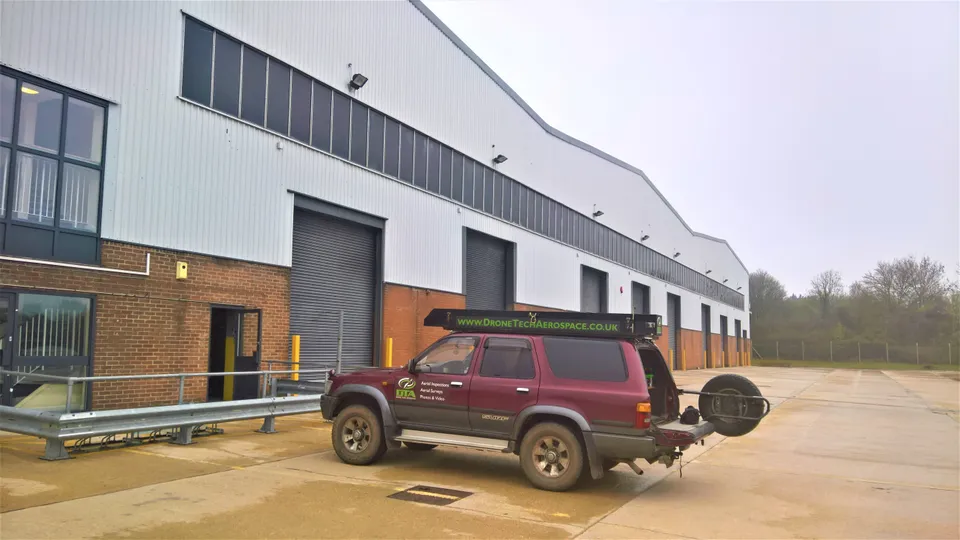
13,000 m2 Warehouse Drone Inspection, Swindon
A full internal and external drone inspection of a 13,000 m2 Swindon warehouse, combining upward-facing camera roof-space inspection with an external topographical survey and 3D model.
Start with the question, not the camera
Tell DTA what asset is being investigated, what the professional team needs to understand, the operating conditions and the expected deliverable. The team will confirm whether aerial thermography is appropriate and how it should be captured.
Request a QuoteTell us about your site.
Send the location and what you need. We'll come back with a clear scope and price.
Or we call you