

Tanks · ducts · plant interiors · inaccessible structures
Confined-space drone inspections
Use a protected inspection drone to capture visual evidence inside enclosed industrial spaces, reducing the need to approach every surface.
Facts panel
- Typical spaces
- Tanks, ducts, chambers and industrial plant interiors, subject to site assessment.
- Platform
- A caged inspection aircraft selected for protected close-proximity flight.
- Outputs
- Recorded video, still frames, location/element structure and annotations when scoped.
- Purpose
- Evidence for engineering, maintenance or access planning, not a substitute for a regulated inspection where one is required.
Confined spaces are one part of DTA's inspection service. Roofs, wind turbines, industrial structures and culverts are covered by the same team.
Explore all drone inspectionsPut the camera where normal access is difficult
Conventional internal inspection can demand scaffolding, rope access, shutdowns or entry into a hazardous environment. A caged drone can often provide an initial visual record or reach parts of the space that are difficult to view safely from the access point.
It does not remove every confined-space control. The site owner remains responsible for the asset and safe system of work, and the operation still requires assessment of atmosphere, access, obstructions, dust, airflow, electromagnetic conditions, lighting, communication and recovery.
What can be captured?
Subject to the site and aircraft limits, DTA can plan visual capture for:
- tanks and storage spaces;
- ducts, voids and internal channels;
- boilers, process areas and enclosed plant;
- internal steelwork and structural surfaces;
- chambers and spaces with difficult direct access.
For culverts and water-filled environments, discuss whether DTA's separate AquaCat approach is more appropriate.
A structured record, not only a flight video
Useful inspection evidence needs orientation. Before capture, divide the asset into agreed elements or zones and identify the areas the engineer needs to review. DTA Inspect can provide a browser-based review environment when suitable.
- Imagery delivered in the agreed element/zone structure
- Stills or annotations extracted where the scope requires them
- What was observed, and what could not be reached or seen
- Date and conditions of the capture
How the work is planned
- 01 Review the asset. Drawings, dimensions, access points, material, internal conditions and the inspection question.
- 02 Assess the environment. Hazards, atmosphere, obstructions, communications, lighting, airflow and recovery options.
- 03 Agree the evidence plan. Zones, required detail, video/still output and any engineer-led observation list.
- 04 Capture and quality-check. Fly only within the agreed safe system, then confirm coverage before demobilising where possible.
- 05 Organise and hand over. Supply the dated evidence and clearly record limitations.
DTA supports the infrastructure and utilities sector with internal inspection evidence for plant and enclosed structures.
Send us these six things
-
01
Site location / boundary
-
02
Required output
-
03
Intended use
-
04
Preferred timescale
-
05
Access / airspace constraints
-
06
Any existing drawings
Where we have done this
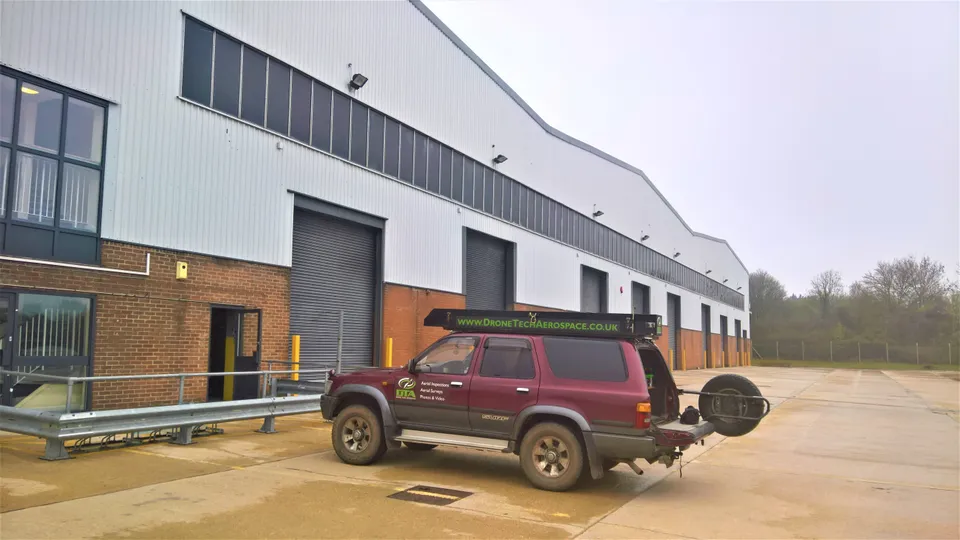
- Swindon: 13,000 m2 warehouse, internal and external drone inspection (2019)
Common questions
Does using a drone remove the need for confined-space procedures?
No. It can reduce the need for a person to enter or approach certain areas, but the operation must still follow the site's safe system of work and any legal or asset-specific requirements.
Can the drone measure wall thickness?
Wall-thickness measurement is not a standard part of this service. Where a specialist payload is suitable for a particular asset, its method, surface requirements and output are verified and scoped separately before quotation.
What if the drone cannot see part of the asset?
The handover must identify areas not captured because of geometry, obstruction, contamination, lighting, range or safety limits. A drone inspection should make limitations explicit rather than imply complete coverage.
See it in practice
9 April 2019
13,000 m2 Warehouse Drone Inspection, Swindon
A full internal and external drone inspection of a 13,000 m2 Swindon warehouse, combining upward-facing camera roof-space inspection with an external topographical survey and 3D model.
30 January 2021
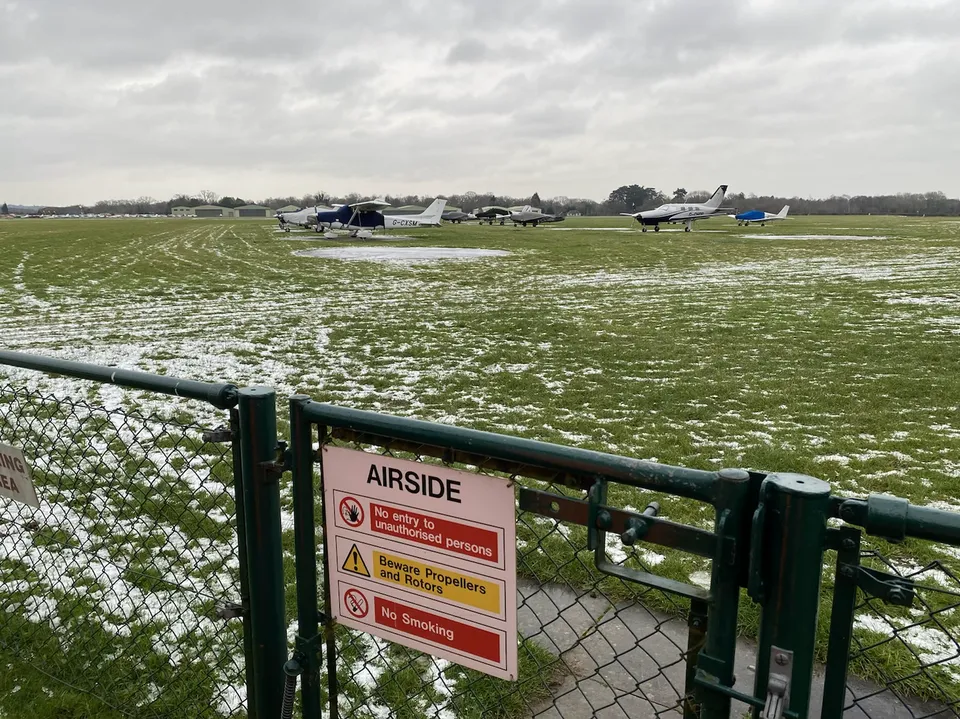
Coordinating a Multi-Year Survey in Denham's Controlled Airspace
How careful preflight planning and close coordination with Denham air traffic control kept a large, extended UAS project compliant and safe in EGLD controlled airspace.
Send the asset information first
Provide drawings, dimensions, access points, internal conditions, known hazards, the inspection question and the people who will interpret the evidence. DTA will assess whether remote visual capture is suitable.
Request a QuoteTell us about your site.
Send the location and what you need. We'll come back with a clear scope and price.
Or we call you